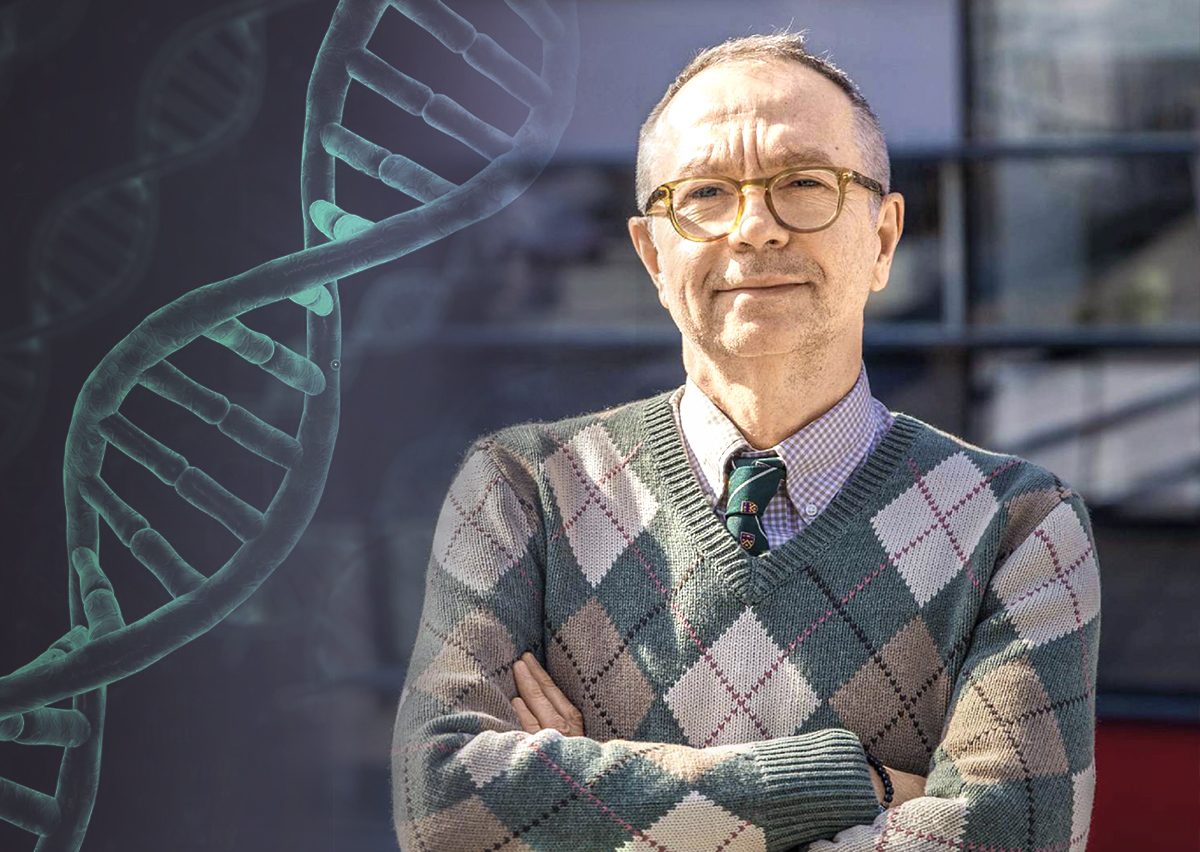
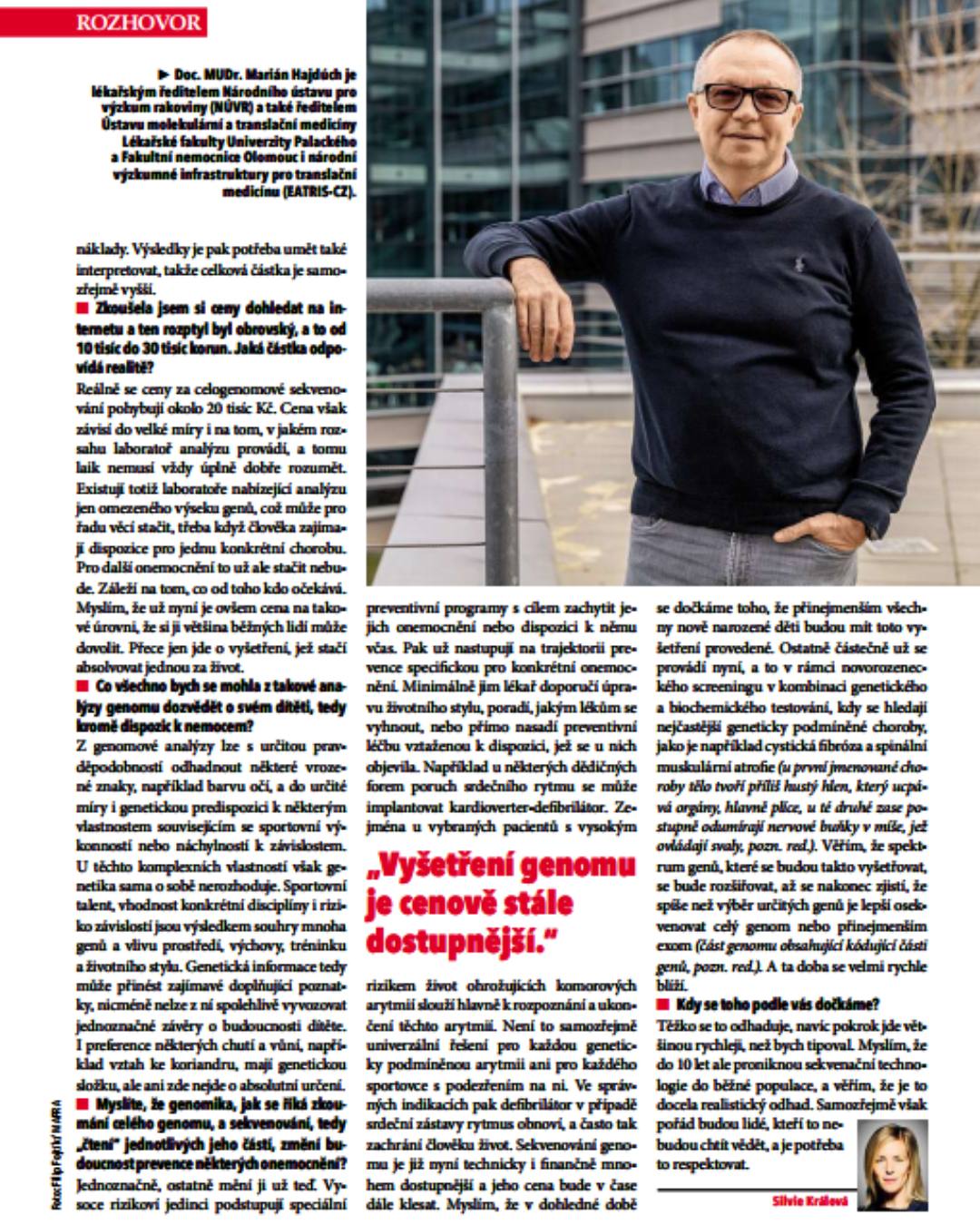
Why do some people develop cancer while others do not—and how much of that risk can we actually influence? In an interview with Marián Hajdúch, it emerges that only around 10% of cancers are hereditary, up to 40% are linked to lifestyle, and the rest is shaped by a combination of chance and natural biological processes within the body. Human genome sequencing is opening new possibilities for uncovering hidden predispositions to health and disease. Marián Hajdúch, Medical Director of the National Institute for Cancer Research and the initiator and director of the CzechGenome project, explains how genetic analysis can aid not only in diagnosis but also in prevention and individual risk assessment. The CzechGenome project is an open reference database of genetic variants of the Czech population for more precise interpretation of genetic findings.
Modern genetics now makes it possible to analyze human DNA in detail and uncover information that was hidden until recently. This allows doctors to better understand which diseases a person may be at risk of and how their body responds to environmental factors. According to experts, genetics is not the only factor. The development of many diseases, including cancer, is strongly influenced by lifestyle. Smoking, alcohol consumption, obesity, and infections can disrupt the body’s natural repair mechanisms and contribute to harmful mutations.
Building comparative genetic databases also plays a crucial role. These help distinguish between common genetic variations and those associated with increased health risks. This, in turn, enables more targeted prevention and personalized treatment. The risk of certain diseases also increases with age, as genetic changes accumulate over time. However, genetic predisposition is not destiny—healthy lifestyle choices and early prevention remain key. Although genetic testing is becoming more accessible, experts emphasize the importance of careful handling and proper interpretation of results, ideally under the guidance of specialists.
The CzechGenome project helps scientists better distinguish which genetic variations are common and which may pose health risks. This contributes to improved diagnostics as well as more targeted prevention strategies.
Read the full interview i TÉMA Magazine.