DNA replication dynamics
Every time a cell divides, it must accurately replicate its entire genetic information and ensure its equal distribution between the two daughter cells. Maintaining genomic integrity therefore requires DNA replication to be both tightly regulated and highly accurate. Failures in this process can lead to mutations that compromise cell viability or promote uncontrolled proliferation, a defining feature of cancer.
Our research focuses on the molecular mechanisms that regulate DNA replication dynamics and safeguard genome stability. In particular, we investigate how cells coordinate rapid genome duplication with mechanisms that prevent replication-associated damage.
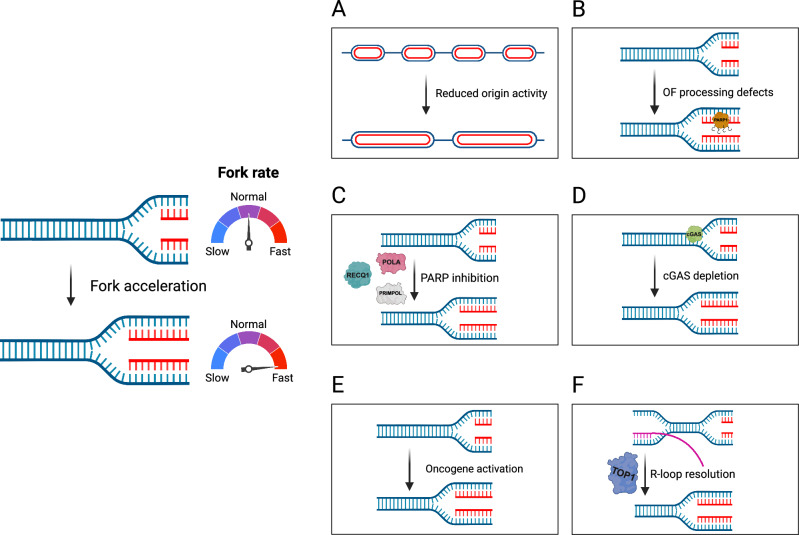
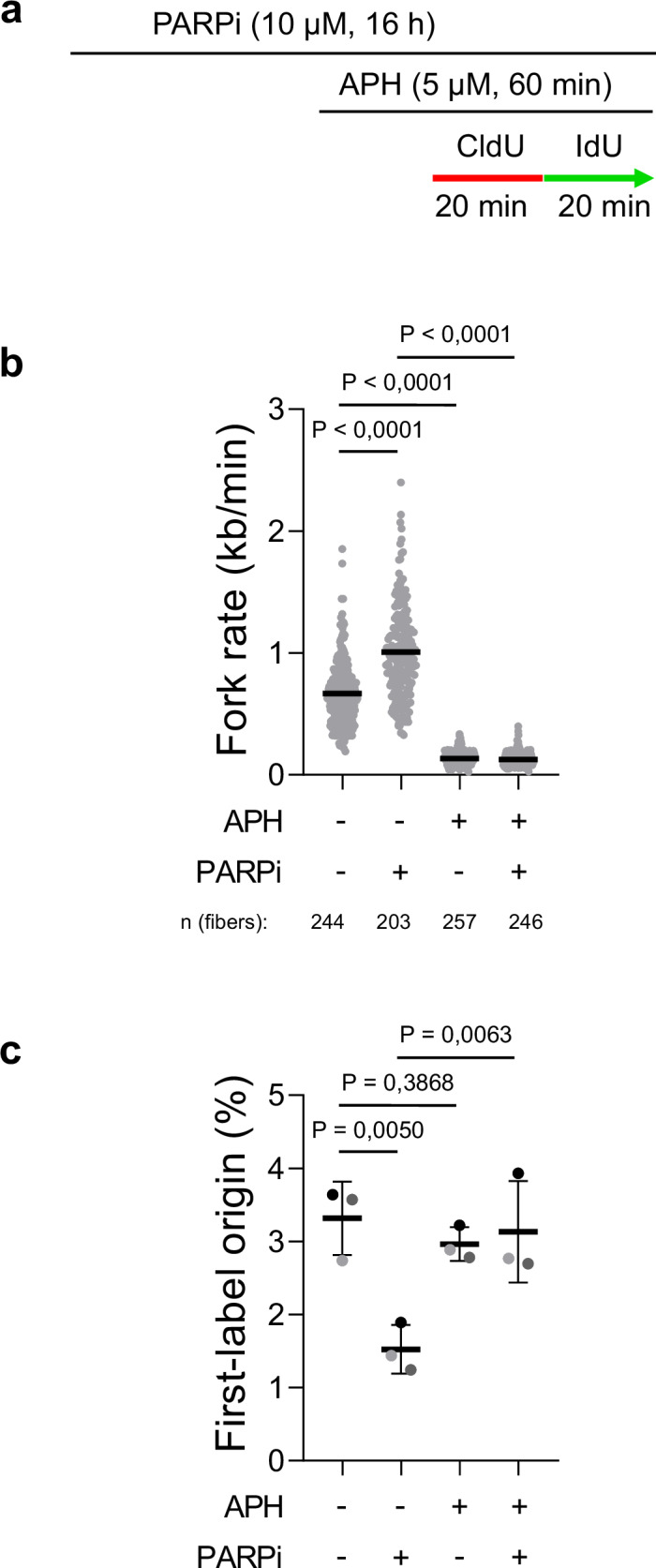
A central area of our work examines the effects of PARP inhibitors, a class of chemotherapeutic agents widely used in the treatment of breast, ovarian, prostate, and pancreatic cancers. Our findings challenge the prevailing model by demonstrating that PARP inhibition accelerates DNA replication rather than inducing replication fork stalling or collapse. However, this increased replication speed leads to the accumulation of single-stranded DNA gaps, likely arising when DNA synthesis and repair processes cannot keep pace with fork progression. These replication-associated lesions compromise genome stability and may represent a key determinant of cancer cell sensitivity to PARP inhibitor treatment.
By elucidating the mechanisms that control replication dynamics and the cellular consequences of PARP inhibition, our research advances fundamental understanding of genome maintenance while providing mechanistic insights with direct relevance for improving cancer therapies.
We welcome motivated Master’s and PhD students interested in DNA replication and clinically relevant research aimed at improving PARP inhibitor therapy.
- DNA replication
- PARP inhibitors
- Okazaki fragment processing
- Replication gap suppression
- Regulation of replication fork dynamics and its impact on tumorigenesis
- Beyond catalytic inhibition and trapping: a multi-parameter analysis of PARP inhibitors
- Single stranded DNA gaps in in early lesions and tumor progression

| Projekt: | DNA replication in human pathophysiology |
|---|---|
| Vedoucí: | Moudrý Pavel Ph.D. |
| K dispozici: | 1 |
| Určeno pro: | Doktorské studium |
| Souhrn: | 1 full-time position |
| Projekt: | Cellular stress in health and disease |
|---|---|
| Vedoucí: | Mistrík Martin Ph.D., Moudrý Pavel Ph.D., Škrott Zdeněk Ph.D. |
| K dispozici: | 3 |
| Určeno pro: | Doktorské studium |
Group leader

Group members
Photo gallery